Category: philosophy

  • Hastamalaka & The State of Realization

    Hastamalaka & The State of Realization

    *excerpt from “Hastamalaka Stotram of Adi Shankaracharya: A contemplation by Swami Purushottamananda” an English translation of Sant Eknath of Maharashtra’s original commentary in Marathi

    What is that which complete in itself can unfold happiness?

    Vedantic Masters refer to it as the ‘Supreme Being” or Sat-Chit-Ananda (Atman). Though ever-accomplished, for the individual (jiva) it appears to be hidden due to ignorance of the Self (avidya). It can be revealed only by Self-knowledge in the pure heart. That state is liberation, Kaivalyam. The Upanishads also declare: ‘Mukti is through knowledge alone’ (jnananad evatu kaivalyam).

    Karma performed without any selfish motive and with an attitude of surrender unto the Lord, brings about purification of the heart and makes it eligible for knowledge of the Self. Such a seeker of knowledge, with pure mind-intellect (heart), gains this knowledge through a study of the scriptures with the grace and blessings of the Guru.

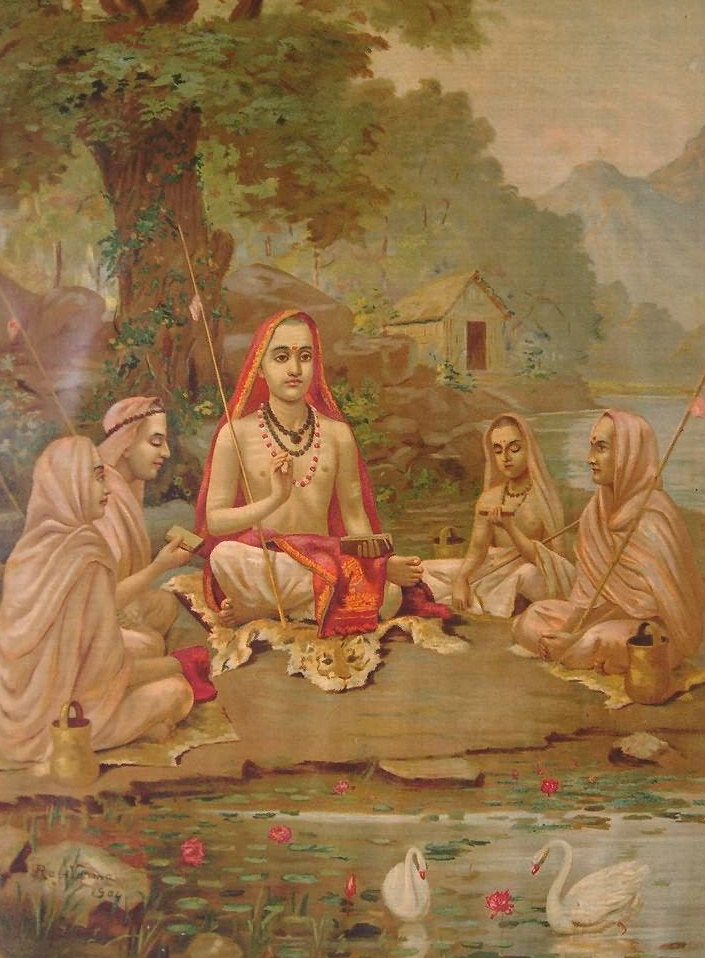
    Hastamalaka, one of the four renowned disciples of Bhagavan Adi Shankaracharya, was such a realised soul, established in the bliss of perfection. As a child, he did not talk to anyone, including his parents. His behavior was like that of ‘Jada Bharata’. There is a story about him…

    Once upon a time, a Siddha Mahapurusha lived on the banks of a river. One day, a lady came to him with a small child in her arms. She requested the Mahatma to look after the baby and went to the river to bathe. Soon after, when the Mahatma was lost in samadhi, the child crawled to the river, slipped into it and died. The dead body of the child came up, floating on the water in the arms of the mother. Terribly shocked to see her baby dead, she brought the dead body to the Mahatma. Hearing her heart-rending cry, he opened his eyes and was moved by her grief. In his infinite compassion, by his yogic powers, he left his own body and entered the dead body of the boy. Thus, there was a realised soul in the form of the child.

    Revelling in Self-Joy (svananda), the child remained in silence (maunam). He neither talked to anyone nor wept like a normal child. As a result, his parents and other people considered him to be insane, dull-witted, deaf and dumb, and so on. The parents were doubtful about performing his thread ceremony, as he would not chant the Gayatri Mantra.

    Fortunately, at that time, Bhagavan Adi Shankaraacharya, on his visit to the famous Mookambika Temple came to the nearby village Sribali. Since the parents were worried about the child, they brought him to the Acarya to receive his blessings. The Acarya was highly pleased to see the signs of Self-Realisation in him.

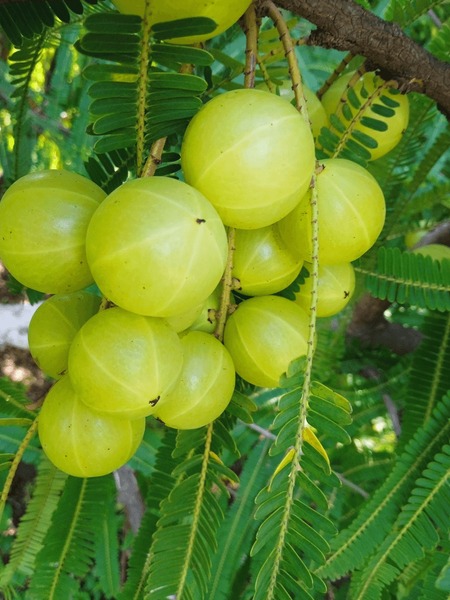
    His state of realisation was as clear as an amalaka fruit kept on the palm, so the Acarya called him Hastamalaka (Hasta means ‘hand’ , amalaka means ‘gooseberry’) and for the benefit of seekers, compiled the conversation in a composition called Hastamalakiyam or Hastamalaka Stotram.
    Hastamalaka Uvaca-

    naham manusyo na ca devayaksau

    na brahmanaksatriyavaisyasudrah

    na brahmacari na grhi vanastho

    bhiksurna caham nija bodharupah

    Hastamalaka replies:

    I am not a man, not even a deva (God) or a yaksha (semi-celestial being), not brahmin-kshatriya-vaishya-sudra, nota brahmachari (student), not a householder, not a forest-dweller (retired person), not even a mendicant (sanyasi), I am the nature of Self-Knowledge.

    Nimmittam manascaksuradripravarttau

    nirastakhilodhirakasakalpah

    ravirlokacestanumittam yatha yah

    sa nityapalabdhisvarupo’hamtma

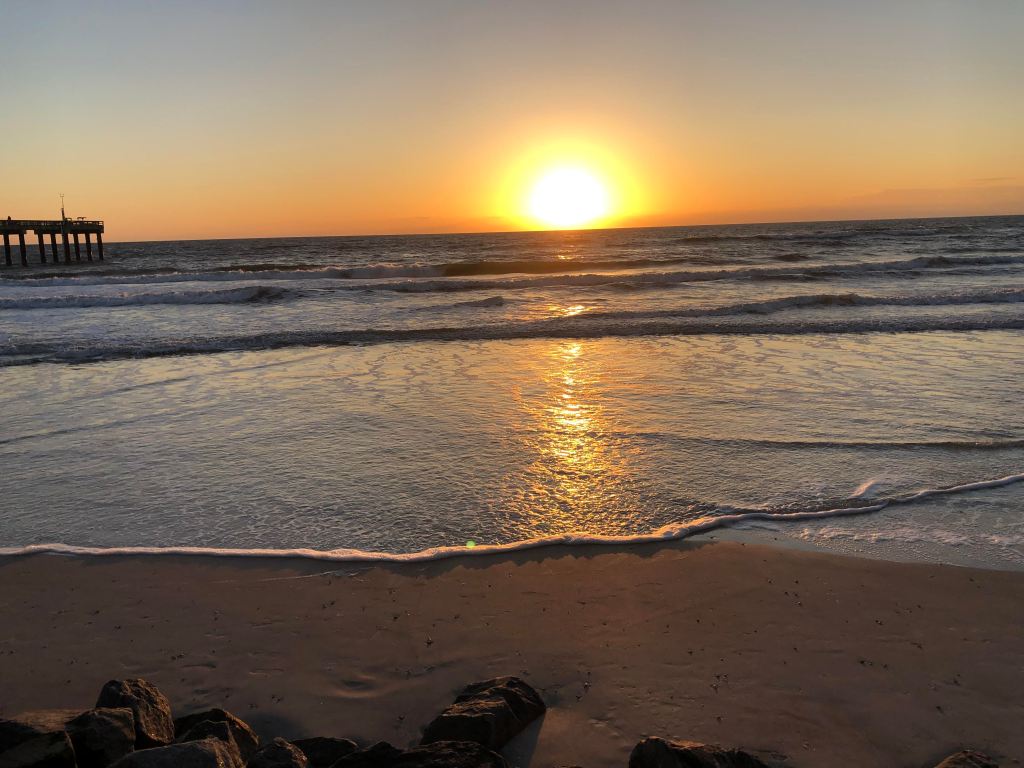
    Who is the cause for the activities of the mind and eyes, is devoid of all limiting adjuncts, like space, just as the sun is the cause for all worldly activities (but is the witness), I am of the nature of that ever-existing Atman. That, which is the cause for the activities of the mind and eyes.
    This is the declaration of Vedanta.

    The play of names and forms (prapancha/samsara) which appears to be real, is proved to be an illusion from the standpoint of the Self, which alone was, is, and shall remain forever unchanged, like a screen on which pictures are projected.

    One who has realized this, understands that though he is in the body, he is beyond it.

    When the sun rise, darkness vanishes on its own. Similarly, in the light of knowledge of the Self, ignorance, with all its paraphernalia, is removed. In the state of unconditioned bliss of the Self, jiva the experiencer dissolves, along with its conditioning. There is no one left other than the Self to describe the experience of the the Self.

    Thus, with the example of the sun, the nature of the eternal Self is indicated as an unconditioned witness, free from the sense of doer-ship and enjoyer-ship.

    These powerful pointers to the Self in fourteen verses provide us great insight into the illusory nature of all our conflicts and to the ever-present Freedom within us.

    Om Shanti! Shanti! Shanti!
  • The Doctrine of the mystics

    The Doctrine of the mystics

    “The Veda possesses the high spiritual substance of the Upanishads, but lacks their phraseology; it is an inspired knowledge as yet insufficiently equipped with intellectual and philosophic terms. We find a language of poets and illuminates to whom all experience is real, vivid, sensible, even concrete, not yet of thinkers and systematizers to whom the realities of the mind and soul have become abstractions. Yet a system, a doctrine there is; but its structure is supple, its terms are concrete, the cast of its thought is practical and experimental, but in the accomplished type of an old sure experience, not of one that is crude and uncertain because yet in the making. Here we have the ancient psychological science and the art of spiritual living of which the Upanishads are the philosophical outcome and modification and Vedanta, Sankhya and Yoga the late intellectual result and logical dogma. But like all life, like all science that is still vital, it is free from the armoured rigidities of the reasoning intellect; in spite of its established symbols and sacred formulae it is still large, free, flexible, fluid, supple and subtle. It has the movement of life and the large breath of the soul. And while the latter philosophies are books of Knowledge and make liberation the one supreme good, the Veda is a book of Works and the hope for which it spurns our present bonds and littleness in perfection, self-achievement, immortality.

    The doctrine of the Mystics recognizes an Unknowable, Timeless and Unnameable behind and above all things and not seizable by the studious pursuit of the mind. Impersonally, it is That, the One Existence; to the pursuit of our personality it reveals itself out of the secrecy of things as the God or Deva, – nameless though he has many names, immeasurable and beyond description, though he holds in himself all description of name and knowledge and all measures of form and substance, force and activity.

    The Deva or Godhead is both the original cause and the final result. Divine Existent, builder of the worlds, lord and begetter of all things, Male and Female, Being and Consciousness, Father and Mother of the Worlds and their inhabitants, he is also their Son and ours: for he is the Divine Child born into the Worlds who manifests himself in the growth of the creature. He is Rudra and Vishnu, Prajapati and Hiranyagarbha, Surya, Agni, Indra, Vayu, Soma, Brihaspati, – Varuna and Mitra and Bhaga and Aryaman, all the gods. He is the wise, mighty and liberating Son born from our works and our sacrifice, the Hero in our warfare and Seer of our knowledge, the White Steed in the front of our days who gallops towards the upper Ocean.

    The soul of man soars as the Bird, the Hansa, past the shining firmaments of physical and mental consciousness, climbs as the traveller and fighter beyond earth of body and heaven of mind by the ascending path of the the Truth to find this Godhead waiting for us, leaning down to us from the secrecy of the highest supreme where it is seated in the triple Divine principle and the source of the Beatitude. The Deva is indeed, whether attracting and exalted there or here helpful to us in the person of the greater Gods, always the Friend and Lover of man, the pastoral Master of the Herds who gives us the sweet milk and the clarified butter from the udder of the shining Cow of the infinitude. He is the source and the outpourer of the ambrosial Wine of divine delight and we drink it drawn from the sevenfold waters of existence or pressed out from the luminous plant on the hill of being and uplifted by its raptures we become immortal.

    Such are some of the images of this ancient mystic adoration.”

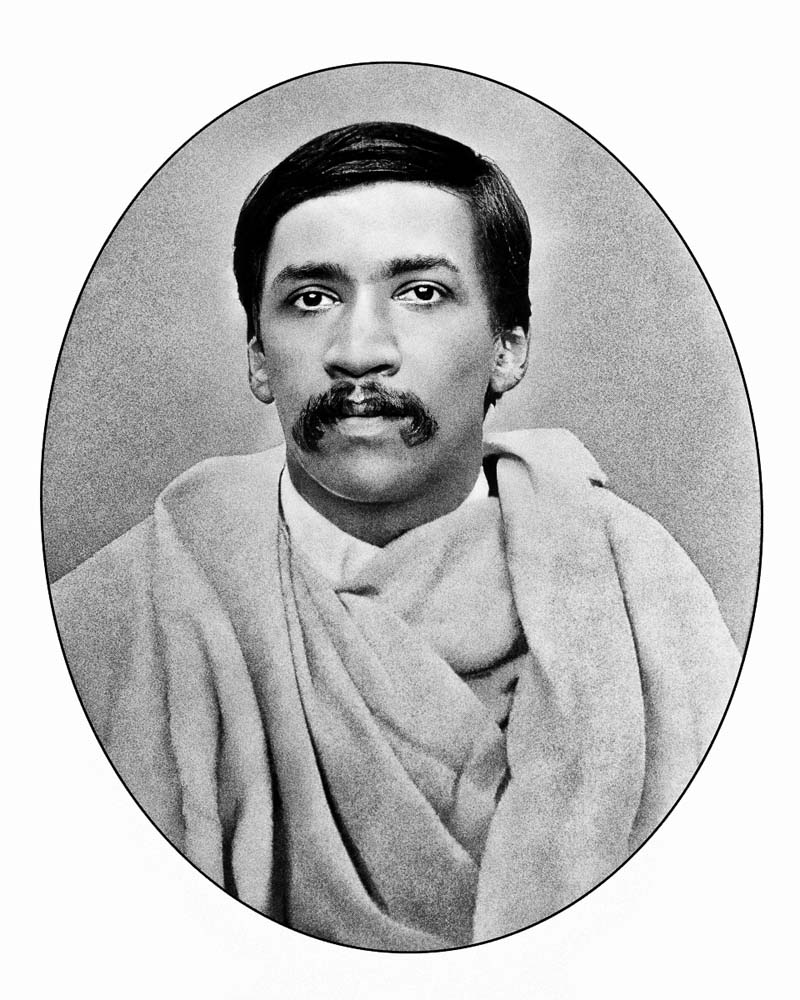
    Sri Aurobindo “Secret of the Veda”

  • Bhoota Shuddhi

    Bhoota Shuddhi

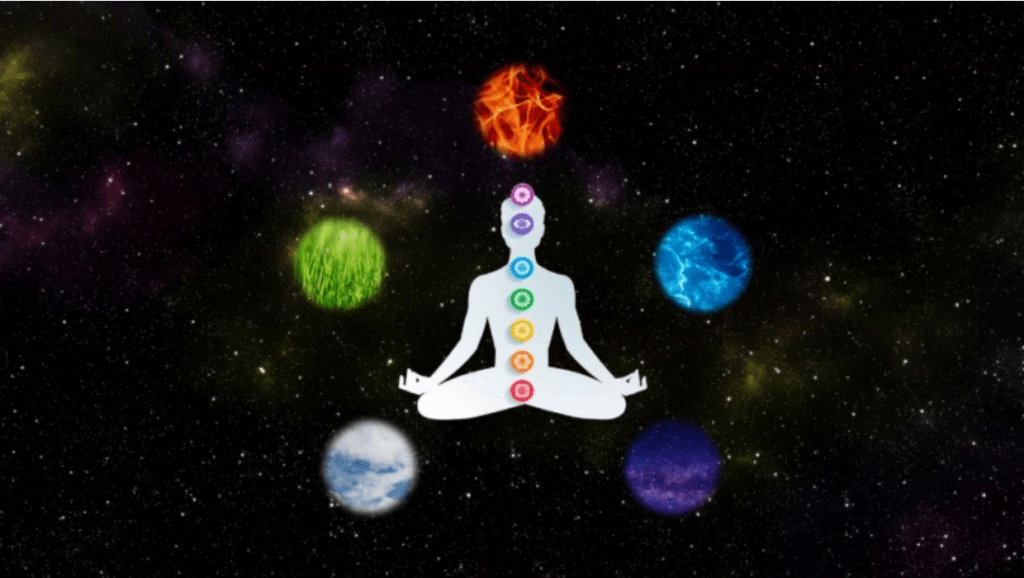
    According to Tantras, Bhutasuddhi is that ritual through which five physical elements of the body become purified and unite in the ceaseless Brahma.

    The Sadhaka should meditate upon the Kundalini Sakti as located in the Muladhara Chakra, thin like a lotus fibra and shining like lightning.  This Kundalini should be awakened from the Muladhara and brought through the Susumna (passing through the Svadhisthana and Manipuraka chakras) to the Anahata chakra located in the Heart. The Jiva in the form of a wick of a lamp situated here should be meditated as taken into the mouth and, piercing the Visuddha and Ajna cakras, has been led to the Sahasrara cakra, located in the Brahmarandhra, which is the house of Supreme Soul. The Sadhaka should, with the Hamsa mantra, merge Kundalini along with the Individual soul into the Superlative Soul.  

    Then, from the sole of the feet to Brahma-randhra, he should meditate on the Five elements with their colors, forms and Bija-mantras. 

    Its method is as follows- {Method #1}

    *Yellow – Square – Bhu Bija: Lam – Earth Element 

    Meditation: soles of the feet up to the knees

    *White – Half-circle – Two Lotuses – Jala Bija: Vam – Water Element 

    Meditation: knees up to the navel 

    *Red – Triangle – Svastika – Agni Bija: Ram – Fire Element 

    Meditation: Navel up to the Heart

    *Smoke – Circle with 6 Bindus – Vayu Bija: Vam – Air Element

    Meditation: from Heart up to the middle of eyebrows

    *Crystal Clear Eye-Catching – Sphere – Akasa Bija: Ham – Sky Element

    Meditation: from middle of the eyebrows up to the Brahmarandhara

    Akasha Ham Crystal

    Vayu Vam Smoke

    Vayu      Vam Smoke

    Agni Ram Red

    Jala Vam White

    Prithvi Lam Yellow

    Earth – Physical elements

    Organs of Activity: anus, feet, vocal chord, genitals and their actions  of grasping and motion

    Sense Organs: nose, tongue, eyes, skin, ears and their actions

    Presiding deities: Brahma, Vishnu, Shiva, Isana and Sadasiva

    Kalas: Nivritti, Pratisuha, Vidya, Santi & Santyatita

    Vayus: Samana, Udana, Vyana, Apana & Prana  

    After thus meditating on the Earth elements the Sadhaka should liquefy the Earth into Water, Water into Fire, Fire into Air, Air into Sky, Sky into Ahamkara (Ego), Ahamkara into Mahat tattva, the Mahat tattva into Prakriti and the Prakriti into the Soul. 

    After that, feeling himself pure and Saccidananda, the Sadhaka should concentrate upon the dark skin toned and thumb-sized embodied Sin located in the left cavity of his abdomen.  Brahmanicide is the head of this embodied sin, theft of gold its hands, drinking wine its heart, defilement of Guru’s bed its waist, contact with the sinners and the like its feet and minor sins its body-hairs. Such an embodied wicked sin, wielding sword and shield with its head upside down, should be meditated on.

    Purascarana Candrika Bhutashuddi: {Method #2}

    “The Sadhaka should meditate that there is a lotus in the heart whose root is Dharma and stalk in knowledge.  Eight kinds of supremacies are its petals and Para-vairaghya is its seed vessel.  It is illuminated by Pranava (Aum).  In its seed vessel is located the Individual Soul bright in form like the wick of a deepak. “

    Meditating thus the Sadhaka should concentrate upon the Kundalini located in the Muladhara.  This Kundalini, sleeping in the Muladhara, should be awakened and, through the pathway of Susumna, be taken along with the Individual Soul to be merged with the Supreme Soul.  For a moment the Sadhaka should experience this state.  Then, through the Kundalini, bring back the Individual Soul from the propinquity of Supreme Soul, establish it again in the heart and then Kundalini brought back to the Muladhara.  

    {Method #3}

    Despite the above two, there is a third method of Bhutashuddhi. In the above two methods we find the experiences of Raja yoga, Bhavana or feeling of Laya Yoga, Sakti of Mantra-yoga and the actions of Hatha-yoga; but in this method there is a beautiful tinge of the power of Mantra and the feeling of the meaning of Mantras.  It undeniably culminates into the Raja-yoga but there is absolutely no Hatha-yoga in it. In this method there is a repetition of the following four mantras with the feeling of their meaning-

    1. Aum paramasivasusumnapathena mula-srngatam allasa allasa jvala jvala prajvala so’ham hamsah svaha.

    2. Aum Bhutasrngatat sirah susumnapathena jivasivam paramasivapade yojayami svaha.

    3. Aum Ram sankocasariram daha daha svaha.

    4. Aum Yam Lingasariram sosaya sosaya svaha.

    Repeating these mantras with a mental feeling of their meaning for a moment with one pointed mind, the body becomes pure and godly. 

    Spirituality is the only medium to know and understand about that unseen 

    beyond worldly power , to whom we know by the name of Ishwar, Allah, Waheguru, Moula, God. Spirituality has many branches. We can achieve our target by any one of its branches.

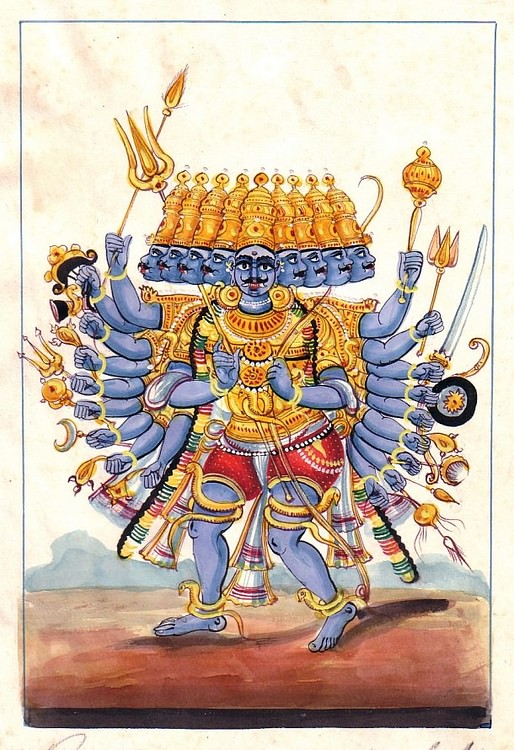
    Ravan Sanhita (Mantra, Tantra and Yantra) “The Science of Mantras” 

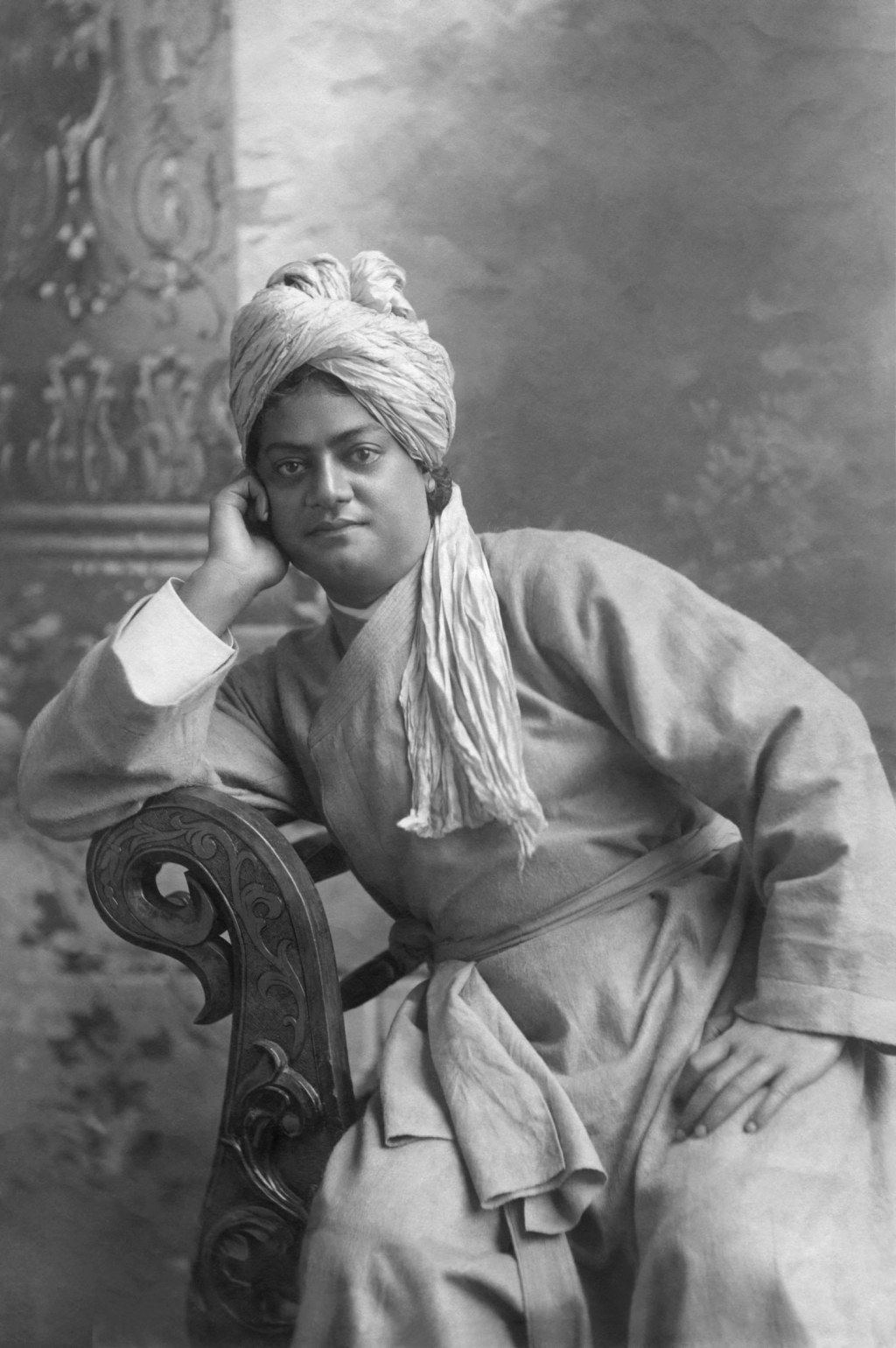
  • “What comes after death?” by Swami Vivekananda

    “What comes after death?” by Swami Vivekananda

    What comes after death? All these Vedanta philosophers admit this Jiva is by its own nature pure. But ignorance covers its real nature, they say. As by evil deeds it has covered itself with ignorance, so by good deeds it becomes conscious of its own nature again. Just as it is eternal, so its nature is pure. The nature of every being is pure. 

    When through our good deeds all its sins and misdeeds have been washed away, the Jiva becomes pure again and when it becomes pure, it goes to what is called Devayana. Its organ of speech enters the mind. You cannot think without words.  Whenever there is thought, there must be words.  As words enter the mind, so the mind is resolved into the prana  and the prana into the Jiva.  Then the Jiva  gets quickly out of the body, and goes to the solar regions, this universe has sphere after sphere. This earth is the world sphere, in which are moons, suns and stars. Beyond that there is the solar sphere, and beyond that another which they call the lunar sphere. Beyond that there is a sphere which they call the sphere of lightning, the electric sphere, and when the Jiva goes there, there comes another Jiva, already perfect to receive it, and takes it to another world, the highest heaven, called Brahmaloka, where the Jiva lives eternally, no more to be born or to die.  It enjoys through eternity and gets all sorts of powers, except the power of creation.  There is only one ruler of the universe and that is God.  No one can become God; the dualists maintain that if you say you are God, it is blasphemy.  All powers except the creative come into the Jiva, and if it likes to have bodies and work in different parts of the world, it can do so. If it orders all the gods to come before it, if it wants the forefathers to come, they all appear at its command. Such are its powers that it never feels any more pain, and if it wants, it can live in the Brahmaloka through all eternity. This is the highest man, who has attained the love of God, who has become perfectly unselfish, perfectly purified, who has given up all desires, and who does not want to do anything except worship and love God. 

    There are others that are not so high, who do good works but want some reward.  They say they will give so much to the poor, but want to go to heaven in return. When they die what becomes of them? The speech enters the mind, the mind enters the Prana, the prana enters the Jiva, and the Jiva gets out, and goes to the lunar sphere, where it has a very good time for a long period.  There, it enjoys happiness, so long as the effect of its good deeds endures.  When the same is exhausted it descends, and once again enters life on earth according to its desire.  In the lunar sphere, the Jiva becomes what we call a god, or what the Christians or Mohommedans call an angel.  These gods are the names of certain positions; for instance, Indra, the king of the gods, is the name of a position; thousands of men get to that position.  When a virtuous man who has performed the highest of Vedic rites dies, he becomes a king of the gods; by that time the old king has gone down again and become man.  Just as kings change here, so the gods, the Devas, also have to die. In heaven they will all die. The only deathless place is Brahmaloka, where alone there is no birth and death.  So the Jivas  go to heaven, and have a very good time except now and then when the demons give them chase.  In our mythology it is said that there are demons who sometimes trouble the gods.  In all mythologies you read how these demons and the gods fought, and the demons sometimes conquered the gods, although many times it seems, the demons did not do so many wicked things as the gods.  In all mythologies, for instance, you find the Devas fond of women. So after their reward is finished, they fall down again, come through the clouds, through the rains, and thus get into the human body, when the grain or plant is eaten by men.  The father gives them the material out of which to get a fitting body.  When the material suits them no longer, they have to manufacture other bodies.  Now there are the very wicked fellows, who do all sorts of diabolical things; they are born again as animals, and if they are very bad, they are born as very low animals, or become plants or stones.  

    In the Deva form they make no Karma at all; only man makes Karma.  Karma means work which will produce effect.  When a man dies and becomes a Deva he only has a period of pleasure, and during that time makes no fresh Karma; it is simply a reward for his past good Karma.  When the good Karma is worked out, then the remaining Karma begins to take effect, and he comes down to earth.  He becomes man again, and if he does very good works and purifies himself, he goes to Brahmaloka and comes back no more.

    The animal is a state of sojourn for the Jiva evolving from lower forms.  In the course of time the animal becomes man.  It is a significant fact that as the human population is increasing, the animal population is 

    decreasing.  The animal souls are becoming men.  So many species of animals have become men already.  Where else have they gone? 

    In the Vedas there is no mention of hell.  But our Puranas, the latter books of our Scriptures, thought that no religions could be complete unless hells were attached to it, so they invented all sorts of hells. In some of these, men are sawed in half, and continually tortured, but do not die.  They are continually feeling intense pain, but the books are merciful enough to say that it is only for a period.  Bad Karma is worked out in that state and then they come back to earth, and get another chance.  So this human form is the great chance.  It is called the Karma-body, in which we decide our fate.  We are running in a huge circle, and this is the point in the circle which determines the future. 

    -from a speech given in 1893 at the Parliament of Religions in Chicago on “The Philosophy of Hinduism”