This is my contribution to the publication by ICVP for 2024 International Conference on Vedic Psychology, a conference dedicated to the study and promotion of the study of psychology as outlined in the Vedic texts.
ABSTRACT
The Bhagavad Gita, Ramayan, Upanishads, Vedas and other texts from Bharat are not merely “stories” or historical accounts. Among certain circles of modern scholars, they are colloquially known as Itihasa because these historical epics also correspond to astronomical events and include coded information to be revealed by meditation on the content. Itihasa includes the epic texts like
the Ramayana and the Mahabharata, which cover important events, ethical guidelines, and moral teachings. These narratives often combine historical accounts with mythological themes, serving both as literary guides and spiritual guides(Wisdom Library 2025). These texts were written by
sages and rishis in a specific poetic meter called Chanda, which itself is the “feet” of the Veda Purusha, the Cosmic being. The rishis used storytelling as a form of teaching students not only life lessons, but valuable information that aimed to awaken the student on the path of self-realization. The sciences of Ayurveda, Jyotish, yoga and were integral parts of everyday life thousands of years ago, when humans were more connected to nature and methods of self-care like dinacharya (daily routine) and ritucharya (seasonal adjustments to daily life) were commonly practiced.
Over time as “modernity” became popularized and people lost touch with nature, the intelligence of the Vedic Scriptures was written off as “stories” and relegated to out-of-touch fictional status. Now we find ourselves at an interesting turning point: rediscovery and a new appreciation of the original complete systems of Bharat to solve the most common real-life modern problems of fear, anxiety and depression.
Keywords: Anxiety, depression, fear, Itihasa, Bhagavad Gita, Upanishads
The Nature of Mind
Mind is universal, atomic or indivisible, and not directly perceivable. Mind directs experience. It is awareness of an object or goal and then perceives the outer object. (Lad, 2002, 16) One of the most studied and “mysterious” aspects of human incarnation is the nature of the Manas (mind). In order to understand the mind better, let’s explore how Ayurveda approaches the subject of
functionality and the 5 Kleshas impact on the different parts of the brain. Prana vayu, sadhaka pitta and tarpaka kapha are key players in brain function. Ayurveda considers the heart to be the seat of the mind; it is also the location of vyana vayu, which is responsible for the circulation, pulses and throbbing impulses in the body. Prana, the neuro-electrical impulses moving through the nerves, delivers messages to and from the brain and from the DNA to the RNA, where past memories and experiences are recorded. Sadhaka Pitta, present in grey matter in the brain and the heart, is responsible for conscious thinking, emotions, recording the experiences in the brain which become memories, and transforming sound into nerve impulses which become feelings and emotions; creating the feeling that “I exist”. Tarpaka kapha, the white film over the brain, records the visual, olfactory and tactile experiences. (Lad, 2002, 59-60)
Five afflictions (Kleshas) to the Manas according to Sage Patanjali: Avidya (ignorance), asmita (egoism), raga (desire), dvesha (aversion), and abhinivesha (will to live) affect the intellectual, emotional and instinctive mind, impacting different parts of the brain. Avidya and asmita affect the front brain, considered the “seat of logic”. Raga and dvesa affect the hypothalamus, the base
of the brain where the sensations of pleasure and pain are imprinted. Abhinivesha affects the unconscious mind or back brain, “the seat of reason” which is the location of samskaras “past impressions”. (Iyengar, 1993, 105)
Ayurveda teaches that Manas has its own Prakriti which is influenced by the foods we eat, sensory experiences and by the mental state of the parents at the time of conception. The manas prakriti is developed in the third month of pregnancy, along with the heart. Manas Prakriti can be changed through the practices of yoga, meditation and spiritual guidance by a mentor or Guru.
When a man finds his existence and unity in the self- who is the basis of life, who is beyond the senses, who is formless, inexpressible, beyond all the predicates – then alone does he transcend fear. (Prabhavananda, 1957, 56)
Creating the Foundation for a Healthy Life
The nature of mind is one concept that has been pursued since time immemorial in the East, but here in the West, we are in the early stages of truly understanding this phenomenon due to the cultural rejection of “esoteric” subjects in favor of social status and wealth accumulation. In the pursuit of wealth accumulation, many get trapped into long hours at work and less hours at home, neglecting Dinacharya (daily health routine). The way that most modern societies operate, leave little time for the everyday person to factor in Dinacharya. More concerning, there is a lack of acknowledgement of a need for spiritual and mental cleanliness: making it very easy for most people to neglect this aspect of their existence, thus creating a fertile breeding ground for
psychological and health imbalances. Psychological problems arise ultimately from a misapplication of the energy of consciousness and lack of proper guidance.
Ayurvedic psychology emphasizes right association to ensure psychological well-being. We should always be careful to keep ourselves in the right company. We should seek the good and strive to be in the company of the wise. In turn, we ourselves should strive to have a beneficial influence on others. Healing the mind involves healing how we relate to the world. It means establishing a society or a group of friends that draws us upward. (Frawley 1997, 152-153)
The practice of Yoga, or inner integration, reverses all psychological problems by merging the mind back into its immutable source of pure consciousness, in which resides perfect peace. For this reason, Yoga is an integral part of Ayurveda, the science of life, particularly for treating psychological disorders. (Frawley, 1997, 259) The Vedic lifestyle includes philosophy, health guidelines, and common sense approaches that defy time and space. This is why more professionals are borrowing many of the basic tenets of Yoga, Ayurveda and Jyotish shastra to integrate into “modern” holistic healing modalities aimed at the Western audience. To create a solid foundation for a lifetime of health, we can begin with the Ashtanga Yoga (Eight Limbs of Yoga): Yama – Rules of social conduct, Niyama – Rules of personal conduct, Asana – Physical postures: right orientation of the physical body, Pranayama – Breath control: right use of pranic force, Pratyahara – control of the mind and senses, Dharana – Concentration: control of attention, Dhyana – Meditation: right reflection, and Samadhi – Absorption: union. Once the foundation is strong, then a personalized Sadhana and health regimen can be added to sustain the Rogi. According to the Mimamsa Philosophy, (mimamsa- analyze thoroughly and understand the truth) to understand our individuality, to truly know ourselves is to know God. God is reflected in all beings in two forms: Jivatman, all the living beings on the earth plane, and Paramatman, the eternal cosmic self. The process of meditation aims to unite and harmonize these two energies. (Lad, 2002,18-19 )
Ayurvedic Psychology & Counseling: Modern Application of an Ancient System
Ayurvedic psychology reflects the views of mind and consciousness found in Samkhya, Yoga and Vedanta and their focus on the Purusha and Atman (higher Self of pure consciousness). It includes descriptions of the mind and its different designations and functions (chitta, buddhi, manas, ahamkara or memory, intelligence, thought and ego) and the place of the five koshas or layers of
the individual soul (ananda or bliss, vijnana or experiential wisdom, manas or sensory mind, prana or vital energy, and anna or food), holding our karmic patterns from one birth to another. Vedic teachings do not merely look at the human mind and physical reality but extend their inner study
to the Self behind the universe, affording a cosmic dimension to their orientation. (Shastri, 2022)
The distinction between eastern and western psychological counseling systems can be made through evaluation of the type of problem-solving method, plan of action and course of treatment. Vedic counseling utilizes the holistic system of Ayurveda to assess the mind, body and spiritual health along with the Vedic texts as a basis for a plan of action to improve the condition of the Rogi. The Western methods use a conversational analysis (based mostly on Freudian/Jungian psychology), medication as a main source of treatment, diet and lifestyle are rarely considered. When there is no clear course of action or goal to eliminate the problem, the suffering of the Rogi cannot be properly identified or treated successfully, especially if the whole being is not considered.
Vedic Counseling addresses the whole life of a person, including the nature of consciousness, mind, Self, karma and rebirth as addressed in Yoga and Vedanta. It extends to all the domains of life, including career, creative expression, relationship, family issues and finances as well as yogic spirituality. Vedic counseling is primarily a psychological approach and the foundation for Vedic psychology. (Shastri, 2022)
Since 2020, there has been public demand for more natural, indigenous, tribal and folk medical systems to be accepted into mainstream health and education. This comes as the results of the pandemic continue to bring suffering in the forms of disease, vaccine injuries, turbo cancers, anxiety, depression, suicide and death. One of the positive outcomes of this crisis has been a resurgence in spirituality, cultivation of self knowledge – Adhyatmika, and maintaining a
connection with nature. The goal of life has been described by countless sages as Nisreyasa – freedom from consciousness, matter and attainment of bliss.
Vedic Texts as Psycho-Spiritual Guides: Lessons from the Bhagavad Gita, Upanishads and the Mahabharata
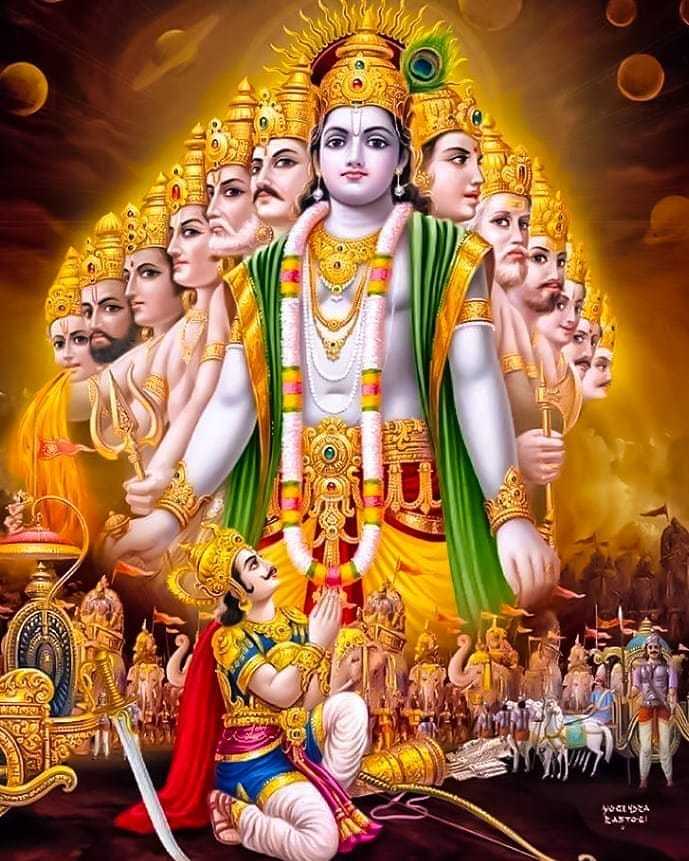
The Bhagavad Gita, probably the most well-known of the Vedic Scriptures outside of India, is usually one of the first texts that Westerners can easily access due to its almost “pop-culture” status and popularity among self-help and new age circles. The ability of the reader to relate to the dilemmas faced by Arjuna, the great warrior, makes this Ithihasa one of the most consulted texts
by seekers of all ages and faiths. It is the age old existential crisis of duty, finding one’s power and place in society and the realization of destiny.
Arjuna asks Lord Krishna to describe the qualities of one who has transcended the influence of the material plane and how he can attain this state. Lord Krishna responds: O son of Pāṇḍu, he who does not hate illumination, attachment and delusion when they are present or long for them when
they disappear; who is unwavering and undisturbed through all these reactions of the material qualities, remaining neutral and transcendental, knowing that the modes alone are active; who is situated in the self and regards alike happiness and distress; who looks upon a lump of earth, a stone and a piece of gold with an equal eye; who is equal toward the desirable and the undesirable; who is steady, situated equally well in praise and blame, honor and dishonor;
who treats alike both friend and enemy; and who has renounced all material activities – such a person is said to have transcended the modes of nature. (Bhaktivedanta Book Trust International, Inc., 1972)
In the Taittiriya Upanishads, there is a dialogue between Brighu and his father Varuna on the nature of Brahman. Varuna explained the physical sheath and the vital sheath and the functions of the senses saying, “He from whom all beings are born, in whom they live, being born, and to whom at death they return – seek to know him. He is Brahman.” Brighu practiced austerities and meditation, coming to different conclusions: Brahman is food, Brahman is primal energy, Brahman is mind, Brahman is intellect and finally Brahman is joy. Brahman is to be meditated upon as the source of all thought, life and action. He is the splendor in wealth, the light in the stars. He is all things. Let a man meditate on Brahman as support, and he will be supported (Prabhavananda, 1957, 58)
In the Puranas and Ithihasa, demonstrations of revival with herbs and rituals for purification are detailed to educate the listener/reader on how to solve situations with plants and various substances. In Valmiki’s Epic “Ramayan”, there is a famous scene where an Ayurvedic treatment is being shared by the characters in “story”. Sushena, the doctor of the Vanaras, asks Hauman to go
to Oushadhi Mountain and bring certain herbs to make a preparation to heal Lakshman and revive him after he was badly wounded in the battle. Hanuman instead brings the whole mountain to the battlefield. The Ayurvedic aushadhi of herbs is prepared and administered as a Nasya, restoring Lakshman’s strength and vitality. (Valmiki Ramayan UTF8, Yuddha 101) When people read this Epic, they do not realize that there are methods of healing given that are still viable; this can be attributed to the socially accepted belief that these methods are “primitive” and are inferior to “modern” western methods.
In our second example, Sage Agastya gives the Aditya Hridayam Stotram to Lord Sri Ram when he feels exhausted, hopeless and unable to defeat Ravana. In this scene, the ritual of purification and recitation while gazing at the Sun are done three times. (Valmiki Ramayana UFT8, Yuddha 105 ) Sage Agastya approached Rama and spoke as follows: dear Rama there is a solution for your worry which is a perennial secret, by reciting it you would be victorious in this war. This is the holy hymn Aditya Hrudayam which destroys all enemies and brings you victory and permanent happiness by chanting it always. Hearing the holy words of Agasthya with an even mind Rama became rejuvenated and came out of a momentary fearful situation; his clouds of worry got dispelled, and he enthusiastically started chanting the prayer of Sun God. (Aditya Hrudayam – In Sanskrit, English )
In the Upanishads and Bhagavad Gita, there are several dialogues espousing the importance of sensory control as one of the keys to alleviating duhkha (suffering). Fear, anxiety, restlessness, mental instability, OCD and insomnia are diseases of Vata, which affect the nervous system, kidneys, adrenals, nerves and tissues. By utilizing ritual, purification, cleansing and following a diet based on Prakriti/Vikruti, we can learn how to master the mind. Abhyasa vairagyabhyam tannirodhah – Practice and detachment are the means to still the movements of consciousness. (Iyengar, 1993, 57)
Problem Solving with Tantra Shastra and Meditation
Since Eastern Philosophy began to make its way West, audiences in these countries have openly embraced aspects of Vedic Philosophy into their everyday lives like Yoga and Ayurveda. At the turn of the 20th century, Brits exploring India began to become fascinated by the “Hindoo” way of life, resulting in a wave of translations of rare texts into English and importing of exotic spiritual practices. One of the greatest contributors to this cause was Sir John Woodroffe, an Oxford educated lawyer who moved to India post graduation, eventually becoming a High Court Magistrate in Calcutta. This is where the story takes a mystical turn. The anecdotal story narrates that one day, Woodroffe was in his court and had to dictate a judgment in a matter which was supposed to be easy to decide with his magisterial calibre. However, he felt that his mind was very clouded and he was unable to dictate the judgment properly. On enquiry, he found that one of the parties to that litigation had engaged a tantric practitioner who was outside his court chambers, and with his sadhana, he had clouded the mind of Woodroffe, making him unable to decide the case. Such a practice falls under the category of abhichaar in the tantra sadhana and is known as Stambhan. (Saxena, 2023)
It was this deeply personal experience of the power of tantra and how it worked on him that sent Woodroffe on a personal journey of self-discovery, that eventually led him to take Kriya Yoga diksha with Master Lahiri Mahasaya (Guru of Sri Yukteswar and Paramahamsa Yogananda). His life outside of the court was dedicated to the studies of ancient tantric texts and Sanskrit,
culminating in the authoring of several books on Kundalini, Tantra and Mantra that today are still widely read due to their clear and concise translations. What began as a curiosity, led to a realization that we are more than a gross physical body: we are spiritual beings with a wealth of energies waiting to be explored, harnessed, and cultivated. In his book “The Garland of Letters (Varnamala)” Woodroffe states:
By worship and meditation or Japa of Mantras the mind is actually Shaped into the form of the object of worship and is made pure for the time being through the purity of the object (namely Iṣtadevatā), which is its content. By continual practice (Abhyāsa) the mind becomes full of the object to the exclusion of all else, steady in its purity, and does not stray into impurity. So long as the mind exists it must have an object and the object of Sādhana is to present it with a pure one. (Woodroffe, 1922, 15)
He further elaborates on the nature of mind:
It is Madhyama-Parimāṇ a, that is limited and divisible into parts and thus takes the form of its objects. Mind has parts in the sense that it is divisible into parts, that is one part of the mind can attend to one thing and to another at one and the same time. As it also takes the shape of the object perceived, it spreads or shrinks with it. (Woodroffe, 1922, 16)
CONCLUSION
I hope to have inspired you to view the Vedic texts with a renewed interest in finding all the hidden gems that lie in their prose. Hari Om Tat Sat.